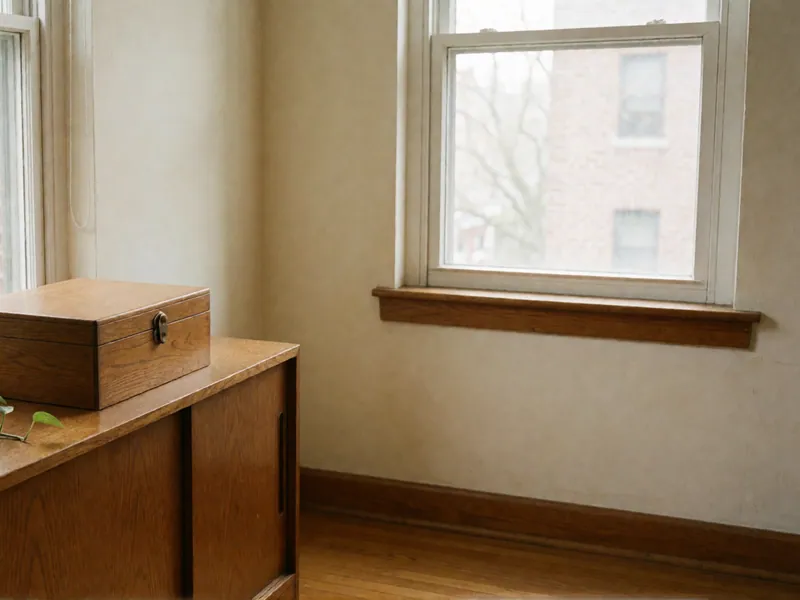
A first meeting that asks nothing of you
About forty-five minutes, at the office or by video. Nothing to bring and nothing to sign, no advice given in it, and nobody expects you to hire the practice afterwards.
The first meeting costs nothing, and you don't have to hire us after it.
This is a demonstration website; nothing here is investment advice.
37-32 61st Street, Woodside, NY 11377

Keelwick Planning · 37-32 61st Street, Woodside, Queens
Written plans at published flat fees, questions by the hour once a plan is done, and a year of planning that ends by itself. Meetings are at a second-floor office on 61st Street in Woodside, a block from the station, or by video.
AI-generated illustration. Not a real home or business.
What the practice does
Keelwick Planning writes financial plans for households in Queens and charges for them the way it says it will. Each of these has a page of its own.
About forty-five minutes, at the office or by video. Nothing to bring and nothing to sign, no advice given in it, and nobody expects you to hire the practice afterwards.
Every fee is printed in one table and charged the same way to everybody. A plan is billed in two halves, the year of planning after each quarter, and nothing more than three months ahead.
Paid only by the households it plans for: no commissions and no referral fees. Every way of charging still pulls somewhere, so each pull is named rather than waved away.
What you said matters, what you have and owe, and the decisions in the order to make them, each with the name of whoever makes it. Every assumption is labeled as one.
Where a plan touches a tax return, a policy or a will, it writes the question down for the person whose work that is, and goes no further.
The practice is invented, so it shows no registration and puts no letters after anybody's name. It prints no results, no guesses about markets and no praise from clients it does not have.
Renters and first-time buyers, city workers, people who run a small business, families who send money abroad, and meetings in English, Spanish, Bengali or Tagalog.
The planning
Most households are not short of good intentions. They have four or five at once, all paid from the same wages: a reserve for emergencies, a card to clear, a home, a child's schooling, money sent to family, a year to stop work. Each makes sense on its own. The work of a plan is deciding which comes first and what waits.
That is why a plan written here is short. It sets down what you said matters, in your words, then the decisions in the order they should be made, with the name of whoever makes each one beside it. Where it has to take something as given, it says so, so you can disagree.
It promises no result and no date, and it does not depend on anybody guessing the markets right.
 AI-generated illustration. Not a real home or business.
Planning
A written plan at a published fee.
A written plan, $2,400 or $3,600
Every source of income you will have, in the order you can draw on it, and the decisions in front of you, written down in plain words.
A written plan, $2,400 or $3,600
How saving for a child's education fits beside a home, a reserve and retirement, and which questions to settle first.
A written plan, $2,400 or $3,600
Where the month's money goes, how large a reserve to keep, and which debt to pay down first, in a plan you can follow.
A written plan, $2,400 or $3,600
Uneven income, a business that is most of what you own, and a household that still needs its own plan.
$3,000 for twelve months
Twelve months of planning after a written plan: two meetings, questions by e-mail, and updates when life changes. It ends by itself.
Where a plan stops
The questions, for the licensed professional.
A household's finances reach into work that belongs to other people. When a plan touches a tax return, an insurance policy or a will, it writes the question down for your CPA, your agent or your attorney, and stops there. Each of these pages says where that line falls and why.
Part of every written plan
Which accounts to save into and draw from, and when, set out as questions for the person who prepares your tax return.
Part of every written plan
Who depends on your income and what would happen if you could not work, written down as questions for a licensed professional.
Part of every written plan
A list of what you own and how each part would pass, and the questions for the attorney who drafts the documents.
From the first conversation to the questions afterwards. Nothing is billed until the second step has been signed.
About forty-five minutes, at the office or by video: what is on your mind, what a plan would cover, and its published fee. No advice, nothing to sign.
Before any paid work there is a written agreement: what the plan or the hours will cover and what they won't, the fee in dollars, when it is billed, and how either of us can end it. Nothing is billed before you sign.
A short questionnaire and only the documents the plan will use, returned when it is done.
A written plan is a short document in plain words: what you told us matters most, what you have and owe, the decisions in front of you in the order they should be made, and who makes each one: you, your employer's benefits office, your CPA or your attorney. Every assumption it makes is written down and labeled as one.
A meeting to read the plan with you, change what doesn't fit and agree the first steps. You act on it in your own accounts.
Sixty days of questions by e-mail are part of every written plan; after that, questions by the hour or a year of planning, if you want either.
Fees
Every fee is published and is the same for everybody: $2,400 for a written plan, $3,600 for a detailed one, $600 for a one-question plan, $300 an hour for questions after a plan, and $3,000 for a year of planning. The fees are what we charge; we don't negotiate them case by case.
A worked example adds the published fees up for one household's first year. Your own first meeting ends with the price of yours, and the written agreement repeats it before anything is billed.
A worked example: a household's fees
A written plan, then two hours of questions Two earners renting in Sunnyside, deciding whether to save for a co-op
Published fees, added up. The fees are the same for everybody; what a household needs is agreed in writing at the start.
How the practice is paid
Fee-only means the practice is paid only by the people it works for: no commissions, no ongoing payments from fund companies or insurers, and no referral fees from any attorney, accountant or insurance professional it names. It does not mean conflict-free.
Every way of being paid has a pull in it. A flat fee can reward doing less work; an hourly fee can reward taking longer; a year of planning can reward keeping you as a client. A real planner names these and tells you how it handles them: here, the scope of every plan is written down before it starts, every hours estimate is in writing, and the year of planning ends by itself.
The planners
Five people work here: a founder who is also a planner, two more planners, an associate planner who prepares drafts, and an office manager. They are fictional. A real practice's planners are registered investment adviser representatives whose records you can look up at adviserinfo.sec.gov; nobody here is described by a registration, an exam, a certification, a school or a number of years, because none of them is real.
 AI-generated illustration. Not a real home or business.
Founder and planner · Also meets in Spanish
Writes retirement and household plans, and holds most first meetings herself.
Inés asks what a household wants before she asks what it has.
Inés reads every plan aloud with the people it is for before it is final.
The picture is a still of a desk, not a portrait. The person is fictional.
 AI-generated illustration. Not a real home or business.
Planner · Also meets in Bengali
Writes plans for small-business owners and for households that support family abroad.
Farhan keeps the business's money and the household's money on separate pages, because they are different questions.
Farhan writes down every assumption a plan makes, so a client can disagree with it.
The picture is a still of a desk, not a portrait. The person is fictional.
 AI-generated illustration. Not a real home or business.
Planner · Also meets in Tagalog
Writes plans for people who work for the city and for families saving for a child's education.
Marites lists the questions for a pension system in the order the system's own forms ask them.
Marites keeps a plan to the few decisions that matter this year.
The picture is a still of a desk, not a portrait. The person is fictional.
Where we stop
Adviser websites are full of claims a practice like this one could not back, and some that no practice could. Each of these pages quotes one, says why it is left out, and links the rule behind it.
A first meeting costs nothing, gives no advice and asks nothing of you afterwards: about forty-five minutes, at the office or by video. The office replies in office hours.